
Propane Water Heaters for Every Home
A propane water heater delivers reliable, on-demand hot water without the limitations of electric systems. Avenir installs Navien and Bradford White propane water heaters, from high-efficiency tankless units to dependable tank models built for Canadian homes. Upgrading from electric or switching fuel types? Our certified technicians handle the full process and help you land on the right unit and tank size for your household.

Request a Quote
Why Choose a Propane Water Heater?
Propane water heaters heat water faster than electric models and maintain consistent output even during peak demand. Tankless units from Navien deliver endless hot water with up to 0.96 UEF, meaning nearly every dollar you spend on fuel goes directly toward heating water. Tank models from Bradford White pair proven reliability with exclusive safety features like the Defender Safety System® and Vitraglas® tank lining. From compact wall-hung tankless units to high-capacity tanks, propane water heaters give homeowners more hot water for less energy. Avenir Energy installs and services propane water heaters as part of our residential propane solutions. Our technicians handle everything from sizing and selection to propane tank setup and ongoing maintenance.
The Two Types of Propane Water Heaters
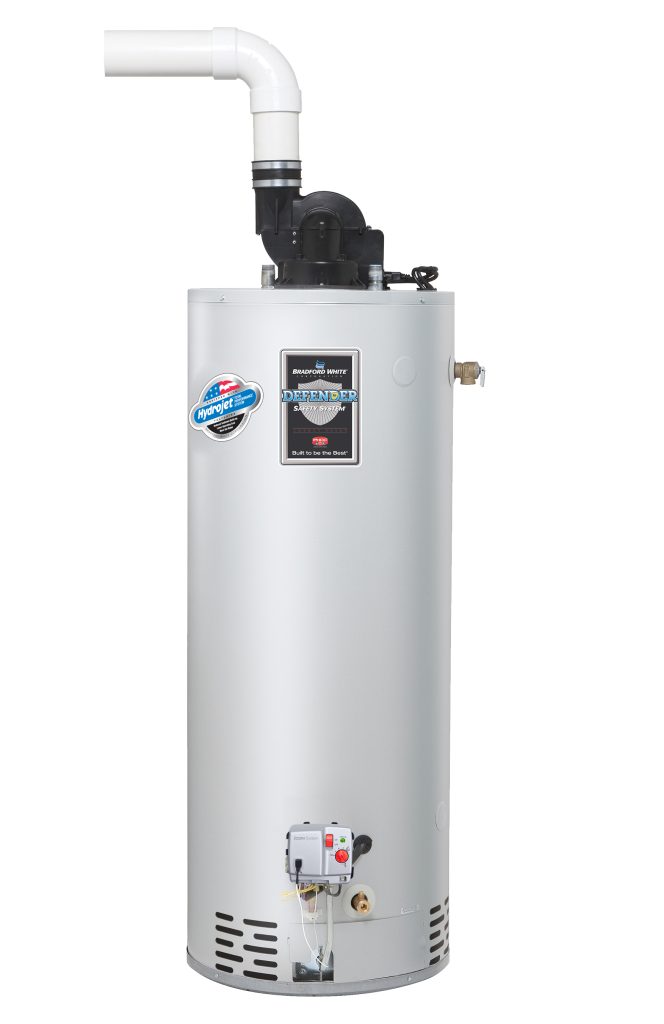
Tank (Storage) Water Heaters
A propane storage tank water heater does exactly what its name suggests — it heats and stores a large volume of water (typically 100 to 300+ litres) in an insulated tank, keeping it ready to use at any time.
How it works: Propane burners heat the water inside the tank. As hot water is drawn out, cold water refills the tank and the heating cycle begins again.
Best for:
- Larger households with high simultaneous hot water demand
- Homeowners looking for a lower upfront installation cost
- Those replacing an existing tank unit with minimal system changes
Key considerations:
- Lifespan of approximately 6–12 years with regular maintenance
- Standby heat loss — the unit continuously reheats stored water, even when not in use
- Takes up more floor space than a tankless unit
- Faster recovery time with propane compared to electric equivalents
Tankless (On-Demand) Water Heaters
A propane tankless water heater heats water only when you need it. When a hot water tap is turned on, cold water flows through the unit, where it is rapidly heated by a propane burner before reaching your faucet.
How it works: A flow sensor detects water demand, activates the burner, and delivers a continuous stream of hot water — with no tank required.
Best for:
- Homeowners looking to reduce long-term energy costs
- Smaller to mid-sized households with moderate hot water demand
- Those with limited mechanical room space
- Eco-conscious homeowners who want to reduce their energy footprint
Key considerations:
- Higher upfront purchase and installation cost than tank units
- Lifespan of up to 20 years with proper maintenance — nearly double that of tank systems
- No standby heat loss, which translates to lower monthly energy costs
- Compact, wall-mounted design frees up significant space
- May require a higher-capacity propane supply line

Side-by-side comparison
| Tank Water Heater | Tankless Water Heater | |
|---|---|---|
| Hot water supply | Limited to tank capacity | Continuous, on-demand |
| Energy efficiency | Moderate | High (no standby heat loss) |
| Lifespan | 6–12 years | Up to 20 years |
| Upfront cost | Lower | Higher |
| Operating cost | Higher (ongoing reheating) | Lower |
| Space required | More | Less (wall-mounted) |
| Best for | Larger households | Eco-conscious/smaller households |

Why Propane Outperforms Electric — For Both Types
Regardless of which system you choose, propane delivers distinct advantages over electric water heaters:
Faster heating and recovery
Propane heats water significantly faster than electric models. That means shorter wait times between uses and more reliable performance during peak demand periods — like busy mornings or back-to-back showers.
Lower operating costs
Propane tankless water heaters can cost up to 50% less to operate compared to electric equivalents. Even propane tank units recover heat more quickly, reducing overall energy consumption.
Reliable performance off the grid
For homeowners in rural or suburban areas without access to natural gas, propane is a clean, dependable energy source that delivers consistent performance — regardless of grid conditions.
A cleaner energy choice
Propane produces lower greenhouse gas emissions than heating oil and coal, making it a responsible choice for households mindful of their environmental impact.
How to Choose the Right System for Your Home
Not sure which option fits your situation? Here are a few helpful questions to consider:
- How many people are in your household? Larger families with high simultaneous demand may benefit from a tank system’s instant availability of stored hot water.
- What is your priority — upfront savings or long-term efficiency? Tank units cost less to install; tankless units save more over time.
- How much space do you have? Tankless units are compact and wall-mounted, making them ideal for homes with limited mechanical room space.
- Are you building new or replacing an existing system? New builds can be designed around either system; replacements may favour a like-for-like swap to minimize installation costs.
If you’re still weighing your options, our team is happy to walk you through what makes the most sense for your home and your budget.
FAQs About Propane Water Heaters
Is a propane water heater better than electric?
Propane water heaters recover hot water significantly faster than electric models, making them ideal for larger households or homes with high hot-water demand. They also continue to operate during power outages when paired with basic safety controls. With higher energy output per unit of fuel, propane is one of the most cost-effective ways to heat water.
Is it worth switching to a tankless propane water heater?
Yes. Tankless propane water heaters like the Navien NPE-2 Series provide endless hot water on demand and take up about 80% less space than a traditional tank. They can also lower your energy bills thanks to ultra-high efficiency ratings of up to 0.96 UEF. Over time, the energy savings and longer lifespan, up to 20 years with proper maintenance, offset the higher upfront cost. Avenir’s technicians can evaluate your current setup and handle the full switch from a tank or electric system to tankless propane, including venting, gas line sizing, and propane tank selection.
What size propane water heater do I need?
The right size depends on your household’s peak hot-water demand. A small to mid-size home with one or two bathrooms may only need a 40-gallon tank or a 150,000 BTU tankless unit. Larger homes with multiple bathrooms and appliances running simultaneously may require a 199,900 BTU tankless model or a high-input tank unit. Avenir’s technicians will assess your home’s hot-water demand, number of fixtures, and propane supply to recommend the best unit and tank size for your needs.
Can a propane water heater be installed indoors?
Yes. Both Navien tankless and Bradford White tank models offer indoor installation options with proper venting. Direct-vent and power-vent models draw combustion air from outside or vent exhaust through an exterior wall, keeping indoor air quality safe. Our certified installation team will assess your space and recommend the best venting configuration.
How long does a propane water heater last?
Tank-style propane water heaters typically last 8 to 12 years with regular maintenance. Navien tankless water heaters can last up to 20 years, backed by a 15-year warranty on dual stainless steel heat exchangers. Consistent annual servicing is the best way to maximize the lifespan of any unit.
How much propane does a tankless water heater use?
Navien tankless water heaters range from 120,000 to 199,900 BTU, which translates to roughly 1.3 to 2.2 gallons of propane per hour at maximum output. In practice, the unit modulates its flame to match demand, so actual consumption is often much lower. This makes tankless propane water heaters one of the most fuel-efficient ways to heat water.
Is it cheaper to heat water with propane or electric?
In most cases, propane is more cost-effective for heating water. Propane water heaters recover hot water faster and deliver more BTUs per unit of energy than electric models, which means shorter run times and lower overall operating costs. While electricity rates vary by region, propane’s higher energy density typically results in lower monthly bills, especially for households with moderate to high hot-water demand. Thinking about making the switch from electric to propane? Avenir’s technicians will walk you through the cost comparison for your specific home and handle the entire conversion.
What is the life expectancy of a propane hot water heater?
A traditional tank-style propane water heater lasts 8 to 12 years with proper maintenance. Tankless propane water heaters, like the Navien NPE-2 Series, can last up to 20 years thanks to durable stainless steel heat exchangers backed by a 15-year warranty. Annual servicing, including flushing sediment from tanks or descaling tankless units, is the most effective way to extend the life of any propane water heater.
