Propane Perspectives
How Does a Propane Tank Work?
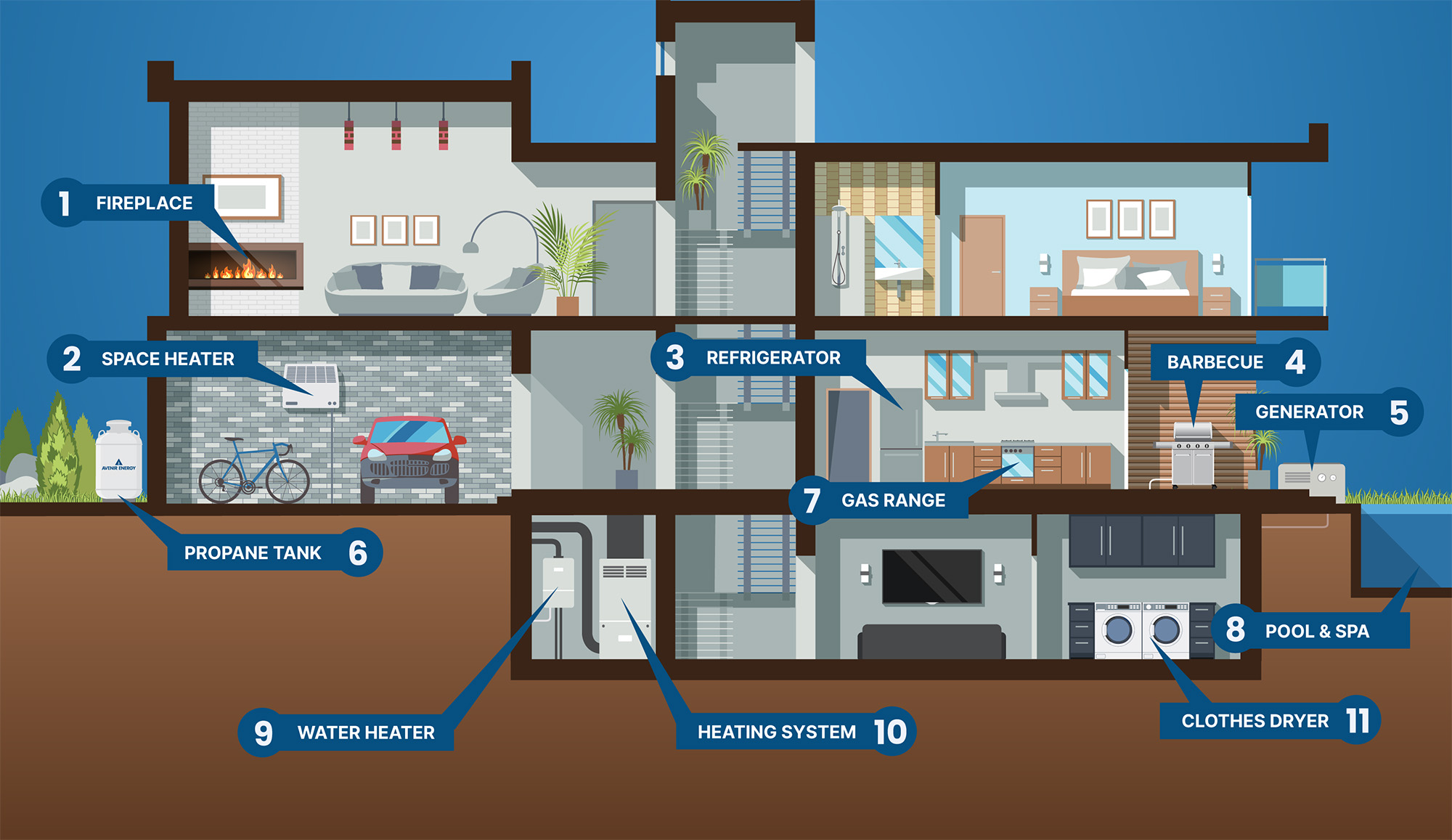
Propane tanks power heating systems, stoves, water heaters, refrigerators, generators, and barbecues across Canada – particularly on rural and remote properties where natural gas lines don’t run. If you’re setting up propane service for a home, cottage, or cabin,we handle tank sizing, delivery, and ongoing refills for properties across Canada.
What Is a Propane Tank?
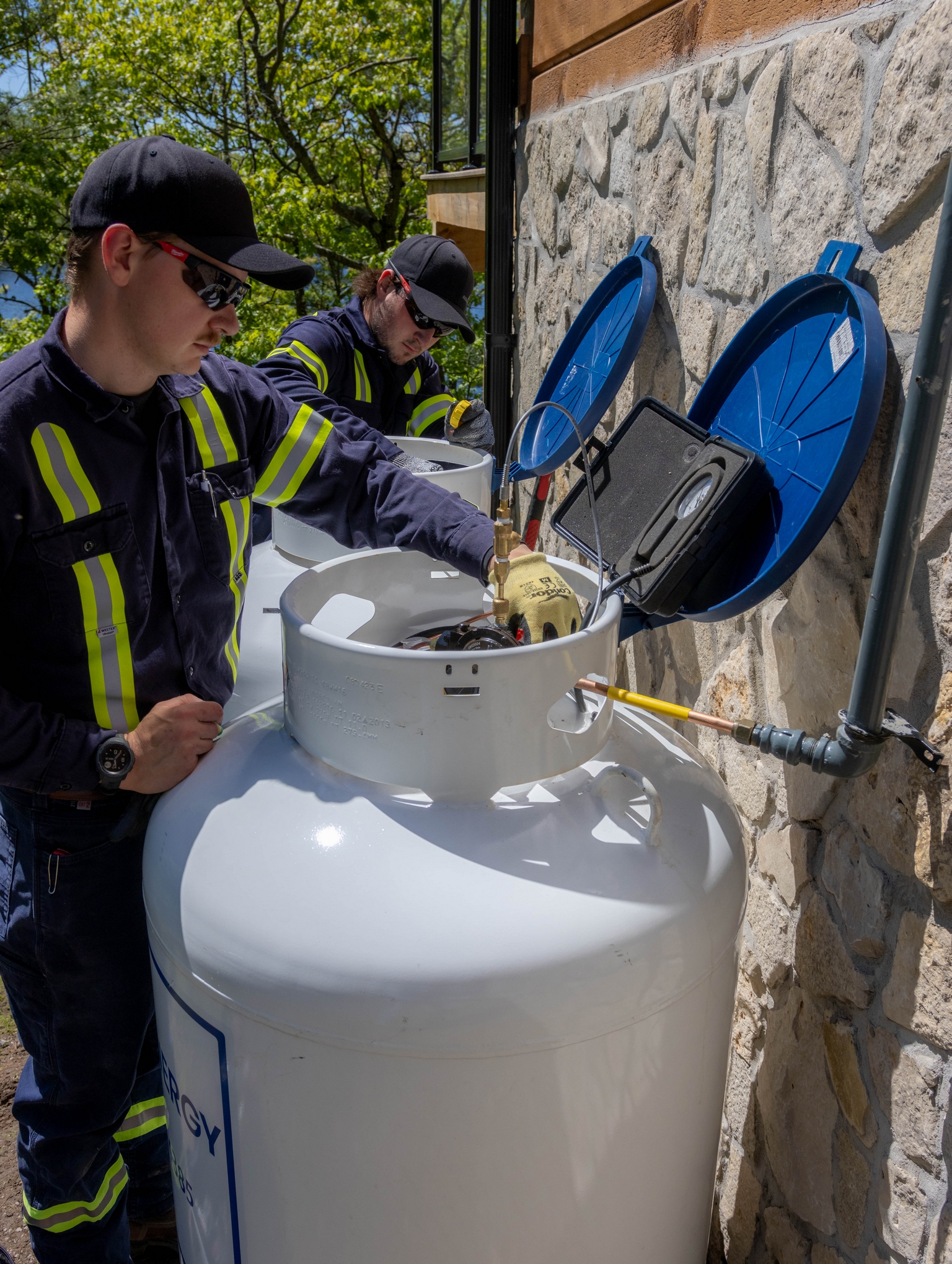
A propane tank is a sealed, pressure-rated steel vessel designed to store liquefied propane safely until it’s needed by an appliance. The tank doesn’t store propane as a gas – it stores it as a liquid under pressure, which is far more energy-dense. One litre of liquid propane expands to roughly 270 litres of propane vapour when released. Tanks come in a range of sizes for different applications. Small portable cylinders – the 1 lb and 20 lb sizes – are used for camping appliances, barbecues, and portable equipment. Larger residential tanks run from 100 lb cylinders up through above-ground and underground stationary tanks sized to the home’s annual fuel demand: 118-gallon, 500-gallon, and 1,000-gallon are the standard residential sizes.Propane Tank Regulations
In Canada, propane cylinders must be periodically inspected and recertified — typically every 10 years for standard DOT cylinders — to confirm the vessel’s integrity and pressure relief valve haven’t degraded. This recertification requirement applies to portable cylinders, not to stationary residential tanks. The Canadian Propane Association outlines the requalification and recycling process for cylinders that reach their inspection date. For stationary residential tanks, your propane supplier manages inspection timelines on your behalf. Our 24PROPLUS service plan covers annual maintenance on primary home heating equipment — furnace, boiler, water heater, fireplace, and space heaters — with 24/7 emergency service in Ontario, New Brunswick, Nova Scotia and PEI, and a 15% discount on repairs, so your system stays inspected and serviced without you having to track the schedule.Main Components of a Propane Tank
Service Valve (Main Tank Valve)
The service valve is the handwheel fitting at the top of the tank. Turning it counterclockwise opens the valve and allows propane vapour to flow out through the gas line. Clockwise closes it and stops the flow completely. This is the valve to close first in an emergency. If you smell propane near the tank or in the building, shutting the service valve at the tank stops the gas supply at the source before it reaches the appliance or gas line.Pressure Relief Valve
The pressure relief valve is a passive safety device built into every propane tank. If internal pressure exceeds a set threshold – which can happen if a tank is overfilled and then exposed to heat – the relief valve opens automatically and releases vapour to reduce pressure. When pressure returns to a safe level, the valve reseals on its own. The relief valve is not a gauge or a service port. It should never be tampered with or manually operated. If a relief valve is venting propane, that indicates a pressure problem and requires a licensed technician.Pressure Regulator
Propane leaves the tank under pressure — on a warm day it can exceed 200 PSI. Your appliances need gas at a much lower, steady pressure (around 0.5 PSI). The regulator sits between the tank and your gas line and brings that pressure down to the right level before it reaches any appliance. On residential installations, our licensed gas fitters install the regulator as part of the initial setup. It keeps your burners and heating equipment performing consistently whether the tank is full or getting low, and regardless of the season. A single-stage regulator can let appliance performance drift as the tank empties or as outdoor temperatures change. You’ll notice it as reduced flame height or inconsistent burner performance, most often on cold mornings with a tank below 20%.Fixed Liquid Level Gauge (Bleeder Valve)
The fixed liquid level gauge – also called a bleeder valve – is a small fitting used by delivery drivers during filling. When the driver opens this valve while the tank is being filled, it releases vapour if the liquid level is below 80%, and releases liquid propane (as a fine mist) when the liquid has reached the 80% mark. That liquid release is the signal to stop filling. This is why Canadian propane tanks are filled to 80% capacity, not more. The bleeder valve is a physical indicator of that threshold during the fill. It is not a gauge for monitoring your level during normal use.What Is the 80/20 Rule for Propane Tanks? – Why Propane Tanks Are Not Filled Completely
The 80% rule is a safety standard applied to all propane tanks in Canada. Liquid propane expands significantly as temperature rises – the expansion rate is roughly 17 times greater than water for the same temperature increase. Filling a tank to 100% leaves no room for that expansion, and the pressure rise that follows can activate the relief valve, stress fittings, or in extreme cases compromise the tank itself. The 20% headspace acts as a built-in buffer for thermal expansion across the range of temperatures a Canadian tank will see between a January night and a July afternoon. When we give you usable capacity figures for a tank, those numbers already reflect the 80% fill – that’s the volume of propane you actually get to use.Propane Tank Safety Guidelines
Propane is stored under pressure and, when released, it’s heavier than air – it sinks and accumulates at floor level rather than dispersing upward. The Canadian Propane Association’s safety guidance on handling and storing propane covers the core handling and storage rules that apply regardless of tank size. The practical requirements:- Store portable cylinders outdoors in upright positions on stable, level surfaces. Never store propane cylinders indoors, in basements, or in enclosed spaces.
- Keep tanks away from heat sources, open flames, and flammable materials.
- Inspect connections, hoses, and fittings for wear or damage at the start of each season.
- Never use an appliance with a yellow or orange flame without having a technician inspect it first – incomplete combustion is a carbon monoxide risk.
Common Uses for Propane Tanks
Propane is the practical energy choice for any property that sits beyond the natural gas service area, which covers most of rural and remote Canada. A single propane tank can supply every fuel-burning appliance in a home. Our residential propane service covers the full range of applications:- Heating systems: furnaces, boilers, radiant in-floor heating
- Domestic hot water: tank and tankless water heaters
- Cooking: ranges, ovens, and cooktops
- Gas fireplaces and insert units
- Propane refrigerators and freezers for off-grid properties
- Standby generators for backup power
- Pool and spa heaters
- Outdoor barbecue hookups