
Perspectives sur le propane
Poêles à propane pour chalets : Guide de chauffage sûr et efficace
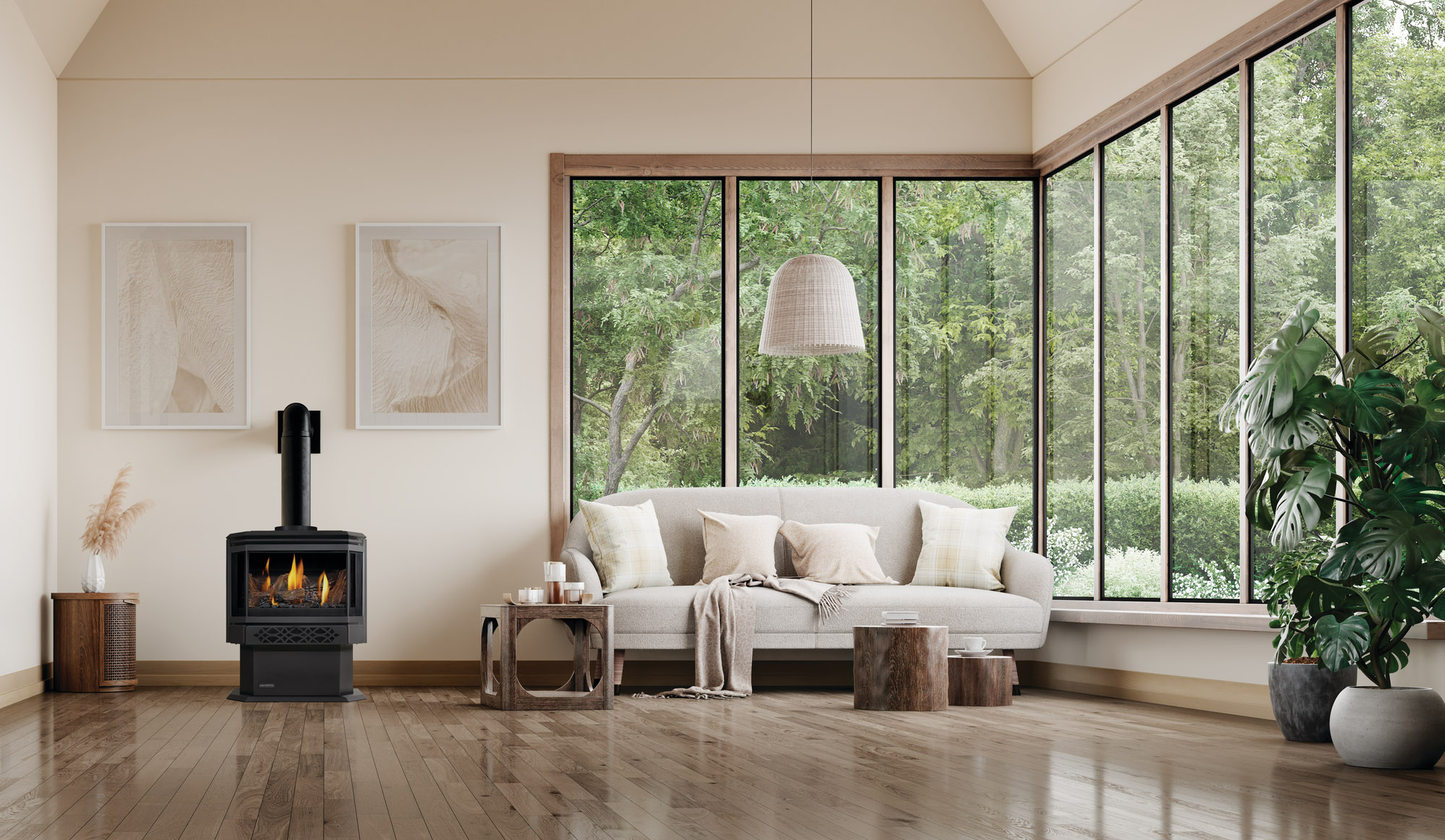
Les poêles au propane constituent l'une des solutions de chauffage les plus fiables pour les chalets et les résidences saisonnières canadiennes. Fonctionnant sans raccordement au réseau électrique, ils offrent une puissance calorifique élevée immédiate, un rendement de combustion pouvant atteindre 90% et ne nécessitent ni stockage de bois de chauffage ni nettoyage des cendres. Les modèles à évacuation directe sont privilégiés pour une installation sécuritaire et conforme aux normes dans les chalets fermés.
Pourquoi les poêles au propane sont-ils un choix judicieux pour les chalets canadiens ?
En bref : ils fonctionnent même quand les autres systèmes sont défaillants. Une tempête de verglas en février, provoquant une coupure de courant de trois jours, rend un radiateur électrique complètement inutilisable. Un poêle à propane, lui, continue de chauffer tant qu'il y a du gaz dans la cuve. Pour les propriétés isolées où les pannes de courant sont plus longues et moins prévisibles qu'en ville, cette fiabilité n'est pas un luxe, mais une nécessité. Le propane est également très réactif. Contrairement aux pompes à chaleur ou aux systèmes électriques qui mettent du temps à chauffer un espace froid, un poêle à propane fournit immédiatement une puissance calorifique élevée. C'est un atout considérable lorsqu'on arrive dans un chalet un vendredi soir de janvier, après des semaines d'inoccupation. Pour les propriétés déjà équipées d'un chauffe-eau, d'une cuisinière ou d'un générateur au propane, l'ajout d'un poêle se fait à partir de la même cuve et de la même conduite d'alimentation. Une seule source de combustible, un seul calendrier de livraison, un seul fournisseur : c'est simple.Quels sont les principaux avantages des réchauds à propane dans un chalet ?
Efficacité et capacité de chauffage
Selon les Association canadienne du propane, Les foyers et poêles à propane offrent jusqu'à six fois la capacité de chauffage des foyers à bois, avec une efficacité de combustion de 90%. Ce n'est pas une différence négligeable : c'est ce qui fait la différence entre un système qui peine à chauffer et un autre qui maintient une température ambiante uniforme dans toute la pièce. Les poêles à propane sont également équipés d'un contrôle automatique de la température ; vous réglez la chaleur souhaitée et vous n'avez plus à vous en occuper. Plus besoin d'alimenter le poêle, de surveiller les flammes ni de vous réveiller dans un chalet froid parce que le feu s'est éteint pendant la nuit. Leurs coûts d'utilisation sont avantageux par rapport aux solutions de chauffage électrique, notamment dans les régions où les tarifs d'électricité sont élevés ou l'approvisionnement irrégulier.Commodité et facilité d'utilisation
Le contraste avec les poêles à bois est frappant. Les poêles au propane s'allument automatiquement, ne nécessitent aucun stockage de bois et ne produisent ni fumée, ni suie, ni cendres. Fini les corvées de nettoyage liées au poêle à bois : évacuation des cendres, nettoyage de la vitre, entretien du conduit de cheminée. L'entretien est minimal comparé aux poêles à bois, ce qui rend le propane particulièrement pratique pour les résidences secondaires où les propriétaires ne sont pas sur place pour assurer l'entretien quotidien.Avantages environnementaux
Le propane brûle beaucoup plus proprement que le bois. Les poêles à propane produisent moins de particules lourdes et de monoxyde de carbone que les foyers à bois traditionnels, ce qui réduit leur impact environnemental. Le propane est également une solution idéale dans les régions où l'utilisation des poêles à bois est interdite ou restreinte à certaines périodes de l'année en raison des réglementations sur la qualité de l'air – une situation qui s'applique à un nombre croissant de municipalités canadiennes.Polyvalence et fonctionnalité
Le propane ne sert pas uniquement au chauffage. De nombreux chalets sont équipés d'une plaque de cuisson ou d'une cuisinière à propane, ainsi que d'un poêle, alimentés par la même bonbonne. Côté chauffage, les poêles à propane peuvent être dotés de panneaux en vitrocéramique qui diffusent la chaleur uniformément, et de ventilateurs qui brassent l'air chaud dans tout l'espace. Certains modèles comprennent un échangeur de chaleur secondaire qui récupère la chaleur supplémentaire et la redistribue plus largement ; un atout précieux dans les chalets à aire ouverte avec de hauts plafonds ou une grande surface à chauffer.Comment choisir le bon poêle à propane pour votre chalet ?
Quels facteurs devez-vous prendre en compte lors du choix d'un poêle à propane pour votre chalet ?
Commencez par les éléments de base : dimensions de la cabine, qualité de l’isolation et utilisation prévue. Puissance calorifique et dimensionnement C'est la décision la plus importante que vous aurez à prendre. Un appareil trop petit fonctionnera en continu sans atteindre la température cible. Un appareil trop grand fonctionnera par cycles courts, ce qui réduira son efficacité et accélérera son usure. L'Association canadienne du propane recommande une puissance de 30 à 60 BTU par pied carré pour les chalets canadiens, à ajuster en fonction de la qualité de l'isolation et du climat régional. Voici un guide pratique approximatif :- 400 pieds carrés ou moins: 8 000 à 15 000 BTU — convient pour une pièce individuelle bien isolée ou un petit campement
- 400 à 700 pieds carrés15 000 à 25 000 BTU — convient pour un chalet de deux pièces ou à aire ouverte
- de 700 à 1 200 pieds carrés25 000 à 40 000 BTU — idéal pour une grande cabine utilisée comme source de chauffage principale
Quels types de réchauds à propane sont disponibles pour les chalets ?
cuisinières à propane à ventilation directe Les poêles à évacuation directe sont le choix standard pour les installations permanentes ou habitables à l'année dans les chalets. Ces appareils aspirent l'air de combustion à l'extérieur par un conduit étanche et évacuent les gaz de combustion par le même conduit. Grâce à l'isolation complète de la combustion avec l'air ambiant, les poêles à évacuation directe sont sécuritaires pour les espaces étroits et bien isolés et sont entièrement conformes aux normes de construction canadiennes pour un usage résidentiel permanent. Leur puissance varie de 8 000 BTU pour une petite pièce à 35 000 BTU pour les grands chalets à aire ouverte. Poêles à propane allier la fonction chauffante d'un poêle à l'attrait visuel d'un cheminée, L'éclairage est généralement assuré par un panneau frontal en vitrocéramique. La plupart sont des appareils à évacuation directe et nécessitent les mêmes exigences d'installation. On les trouve fréquemment dans les chalets et les cabanes où l'appareil de chauffage devient l'élément central de la pièce. Cuisinières et fours à propane L'utilisation du propane ne se limite pas au chauffage. De nombreux propriétaires de chalets alimentent leur cuisinière à propane avec la même bonbonne, ce qui leur permet de cuisiner et de se chauffer avec une seule source d'énergie.Quelles sont les exigences d'installation pour un poêle à propane de cabane ?
Installations d'appareils à gaz au Canada L’installation d’un installateur de gaz agréé est obligatoire. Il n’y a pas d’ambiguïté à ce sujet : selon la réglementation canadienne, le raccordement de la conduite de gaz, l’installation du régulateur et la mise en service de l’appareil doivent être effectués par une personne agréée. L’auto-installation d’un appareil de chauffage au propane comporte des risques importants pour la sécurité et des risques juridiques. Une installation professionnelle comprend :- Dimensionnement de la conduite de gaz en fonction de la puissance calorifique (BTU) de la cuisinière et de tous les autres appareils raccordés.
- Test complet de pression du système avant que le gaz ne soit acheminé vers un appareil.
- Installation et étanchéité du tuyau de ventilation conformément aux spécifications du fabricant pour les unités à ventilation directe
- Contrôle d'étanchéité de tous les raccords et connexions
- Allumage de l'appareil et vérification du bon fonctionnement de la flamme et de la puissance calorifique avant la mise en service.
Quelles sont les pratiques d'entretien et de sécurité requises pour les poêles à propane de cabine ?
Nettoyage et inspections réguliers
Au début de chaque saison, avant la première utilisation après une longue fermeture, veuillez suivre cette liste de vérification :- Inspectez le tuyau d'évacuation.Des oiseaux et des insectes peuvent nicher dans ou obstruer partiellement le chapeau d'aération extérieur pendant les mois d'inutilisation. Une aération obstruée empêche l'évacuation sécuritaire des gaz de combustion. Vérifiez et dégagez l'orifice avant d'allumer l'appareil.
- Vérifiez les tuyaux et les raccords.Les tuyaux de propane flexibles se dégradent sous l'effet des températures extrêmes. Vérifiez l'absence de fissures, de fragilité ou d'usure près des raccords. Tout dommage visible nécessite un remplacement avant utilisation.
- pilote d'essai et allumageUne veilleuse permanente doit s'allumer facilement et maintenir la flamme sans plusieurs tentatives. Une difficulté d'allumage indique souvent un orifice de veilleuse encrassé ou un thermocouple défectueux.
